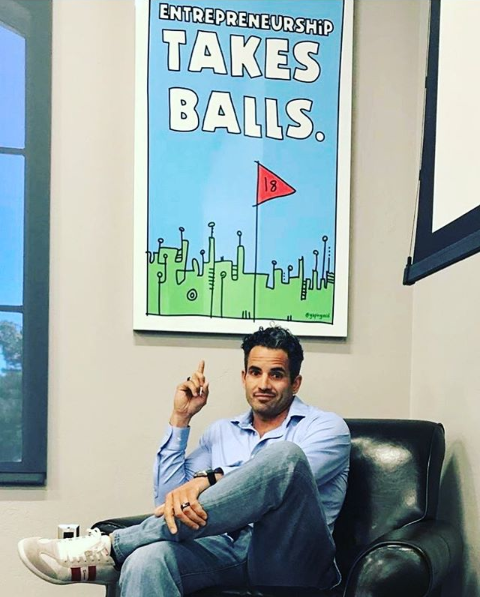
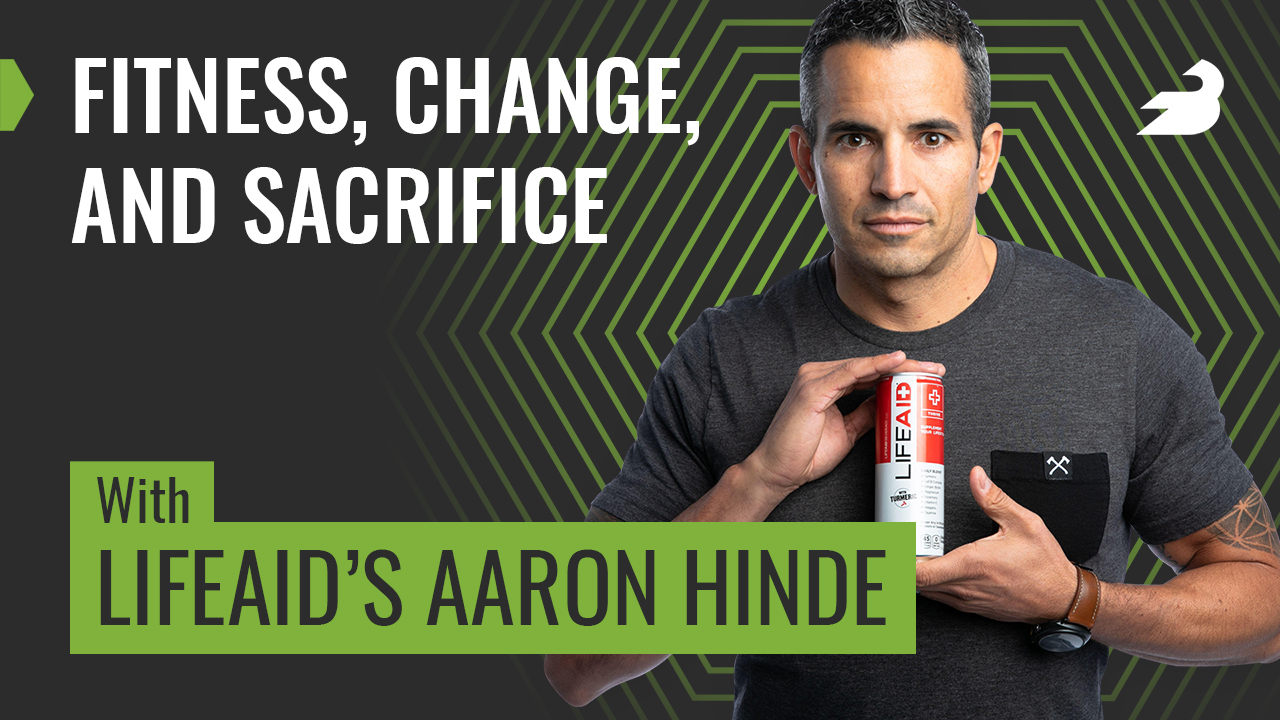
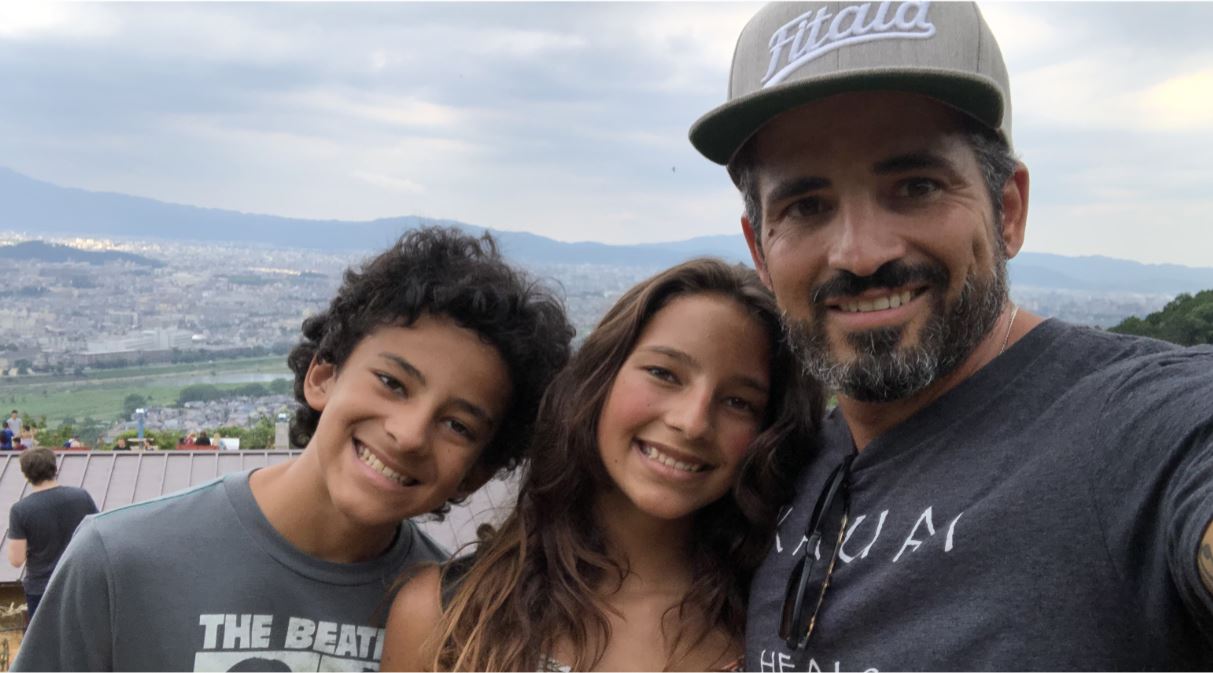
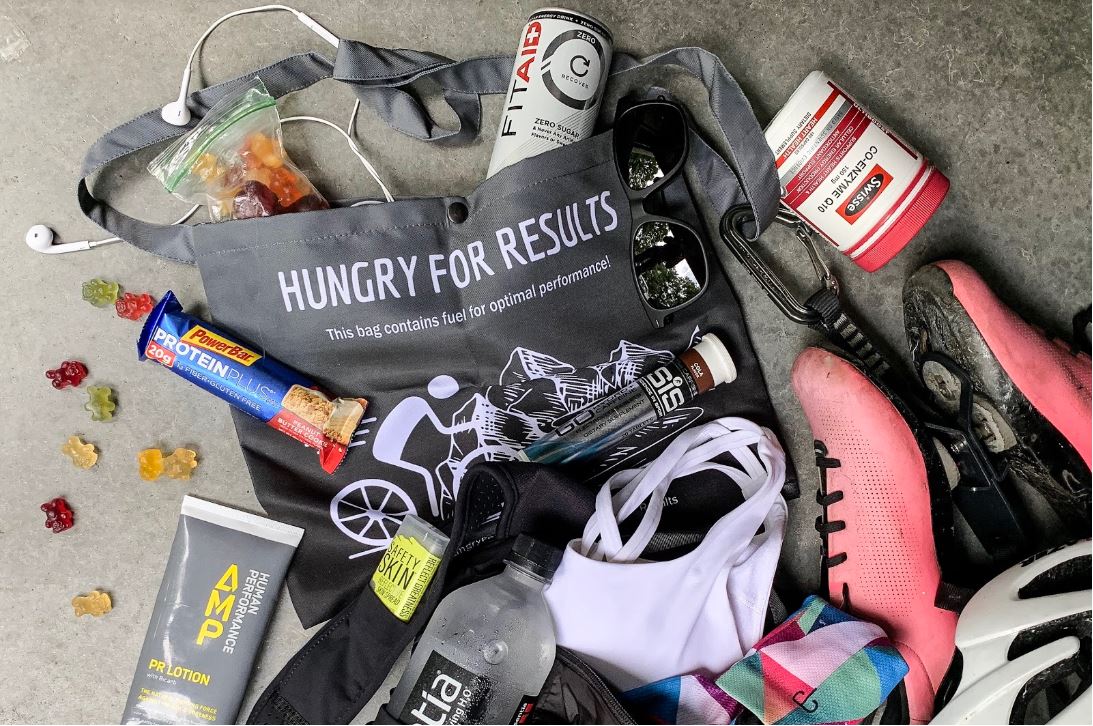
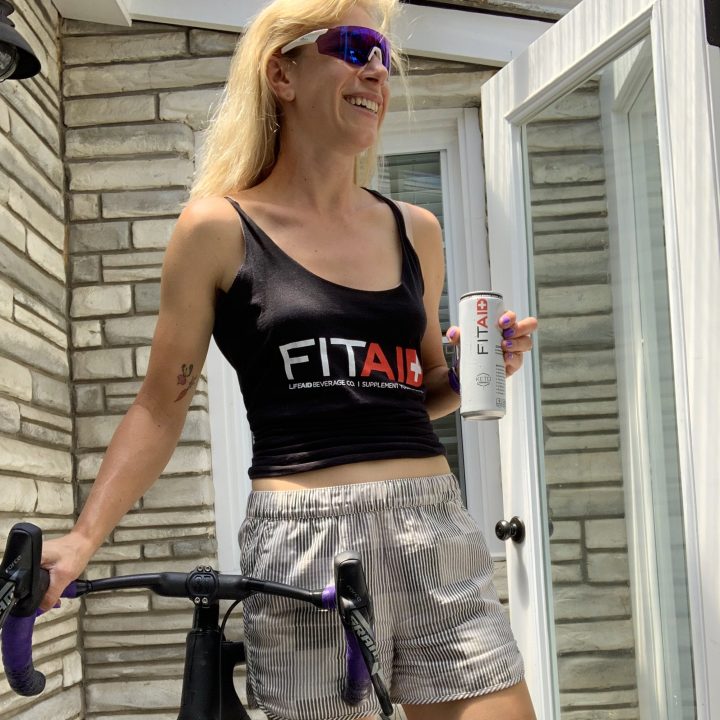
There are few people in fitness — much less fitness entrepreneurs — who keep it honest and real like Aaron Hinde. He’s an open book, someone who’s just as eager to explain the bad as he is to celebrate the good. The Co-Founder and President of LIFEAID Beverage Company — makers of FITAID — Aaron is a constant presence at the CrossFit Games, where his company is one of the sport’s most visible sponsors. He counts top athletes and coaches among his friends. But that success didn’t come without major sacrifice and some serious “lean times” that left Aaron questioning whether his path was really correct.
In this episode of The BarBend Podcast, we talk about LIFEAID’s rise from scrappy startup to major fitness player. That includes guerilla marketing campaigns, bootstrapped operations, and trying to build a brand while living from one week to the next.
We also dive into how Aaron’s background as a clinical chiropractor impacts his perspective today, allowing him to spot trends in fitness before they even take off. Aaron also shares some of his craziest CrossFit Games stories, along with what you might not realize about the world’s top CrossFitters.
If you want to know what’s coming next in fitness, or simply need a dose of perspective when it comes to fitness entrepreneurship, tune in!
In this episode of The BarBend Podcast, guest Aaron Hinde and host David Thomas Tao discuss:
- The inspiration behind LIFEAID as a company and FITAID specifically (3:10)
- Early guerilla marketing that included sneaking product into the CrossFit Games (FITAID is now an official presenting sponsor of the event) (3:30)
- Why party-goers were the first target market for the company (4:01)
- How Aaron and his team “brought the party” to CrossFit through a work hard/play hard mentality (7:18)
- Aaron’s personal experience with CrossFit, including his background as a chiropractor (11:55)
- Weathering the “lean times” as an entrepreneur and family man (14:50)
- Working through financial struggles and rough times during the company’s early days (17:42)
- Aaron’s craziest CrossFit Games experience — what he can and can’t recount! (18:00)
- Why CrossFit’s elite are poised for continued success (23:00)
- What most fans might not know about the top CrossFit athletes, their training, and backgrounds (25:31)
- The next frontier for performance products and services (27:20)
TRANSCRIPTION
Aaron Hinde: If you have a shitty day at work, it’s going to affect you at home. If you have a fight with your spouse, it’s going to affect you at work. It’s just life. Knowing that it’s just life, when I’m on the road, 55, 60 flights a year like I was a few years back, I’m going to enjoy myself as much as I can because I’m grinding it out.
David Tao: Welcome to the BarBend podcast where we talk to top athletes, coaches, influencers, and minds from around the world of strength sports, presented by BarBend.com
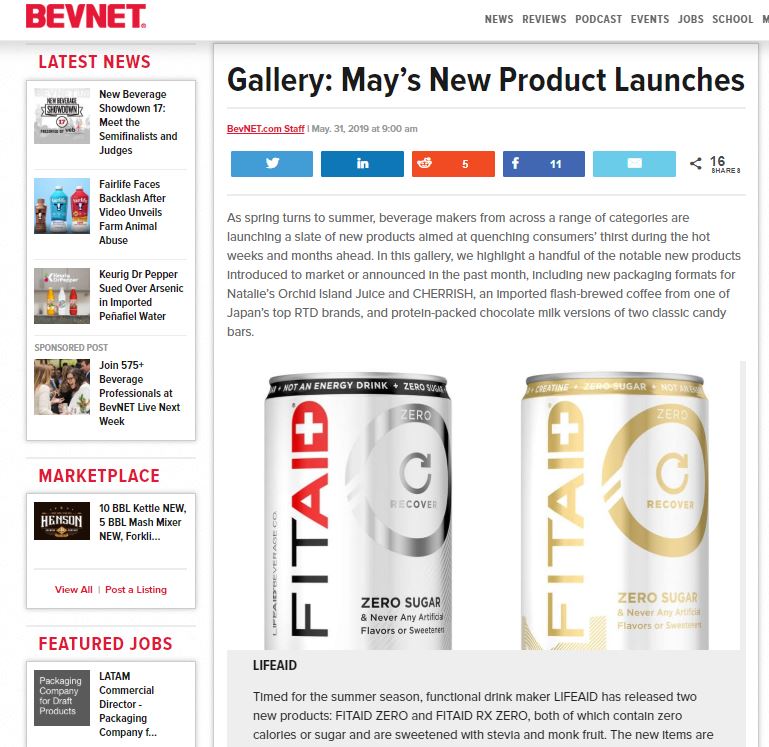
Today, on the BarBend, I’m talking to Aaron Hinde, the president and co-creator of LIFEAID Beverage Company. Probably best known as the makers of FITAID. You may recognize them from their sponsorship of the CrossFit Games, on the social media pages of some of the world’s top fitness athletes, or in coolers and fridges in thousands of gyms and stores worldwide
Long before he became a ready-to-drink beverage tycoon, Aaron was a practicing chiropractor. His outlook on, and approach to fitness changed after finding CrossFit around 2009, and in many ways, Aaron’s company is a reflection on the gaps he saw in the wellness and recovery space. These days FITAID is a household name in the CrossFit community, but it wasn’t always that way.
In this episode, Aaron shares some borderline hilarious stories about guerrilla marketing in the company’s early days, including sneaking backpacks of product into events. He also talks about the early sacrifices he, his business partners, and his family made to get LIFEAID off the ground, including some very lean times where the company’s future and Aaron’s very livelihood was shaky at best.
If you’re someone who’s interested in the business side of fitness, or simply learning how one of the most driven people in that community thinks and approaches life, I think you’ll really enjoy this recording. Just a quick reminder, if you’re enjoying the BarBend podcast, make sure to leave a rating and review in your podcast app of choice.
This helps us stay on track in bringing you the best content possible week after week. If there’s someone you’d absolutely love to hear on a future BarBend podcast episode, please let us know in your podcast review. I personally read each and every review so your suggestions will be seen.
All right, today on the BarBend podcast, I’m joined by Aaron Hinde:. He is the president and co-creator of LIFEAID BevCo. You might know them a little better for their drinks like FITAID, GOLFERAID, TRAVELAID. Aaron, thanks so much for joining us on the podcast. I know it’s been a little while since we talked, but it’s great to hear your voice as always.
Aaron Hinde: David, thanks for having me on.
David Tao: I was first introduced to you and your company years ago through the CrossFit space, but LIFEAID goes way back. It’s a little bit older and has had a longer history than a lot of people might know of. Tell us a little bit about the early days of the company, how you met you business partner, and what inspired you to start a company like this in the first place.
Aaron Hinde: We just came from a CrossFit Games couple weeks ago. I was almost getting choked up being in the middle of a stadium. Justin Bergh brought me out there and we had the big branding on Sunday. We were the presenting sponsor on Sunday.
We’ve come quite a way since 2011 when we were sneaking half a case of product into the CrossFit Games with our backpack, trying to get cans to some key individuals. Ryan and I met in a CrossFit gym here in Santa Cruz in 2009 and hit it off. We became buddies. We started the company in 2011 and been off to the races ever since.
David Tao: Did you start out building a product for the CrossFit community, or were you targeting a different athletic community? What was the target consumer back in 2011?
Aaron Hinde: You could say that party goers are athletic out on the dance floor, but really our first concept and idea was a product called RAVERAID because we were going to festivals and Burning Man. A lot of us take certain supplements like 5HDB and milk thistle, B vitamins. You’re out having a good time for a weekend and dancing all night. That was the first concept.
We were thinking, “Well, shit, if we’re going to do something for the festival community, why don’t we do something for CrossFit because we CrossFit, too.” That’s where FITAID came along. Well, we golf once a week back when we had free time so why not something for golf. That’s a unique sport. We registered about 75, 80 domain names over one evening over some drinks.
David Tao: It’s interesting, too, because the festival-goer crowd, you might go to one, maybe two festivals as an adult every year because you’re living your life. It’s a lot of time off but when you’re a CrossFitter, or you’re an athlete, if you can target that community with a product, they’re going to take it every day, maybe twice a day.
Aaron Hinde: Yeah. We didn’t get serious legs with this company until we went all in with CrossFit and FITAID. We launched three products almost, back to back to back. FITAID, GOLFERAID and PARTYAID.
We actually launched GOLFERAID first because we thought it was the lowest thing through those, you know, no competitions, new product for golfers. Shortly after that we launched FITAID and then PARTYAID and we were so distracted. There was three separate businesses. Basically, we had three separate websites, different social media.
We were doing events where you know, we’d be at a golf event with polo shirt and GOLFERAID hats playing golf, go down to San Francisco to a fire spinning festival slinging PARTYAID, and then do a CrossFit comp, with our Lulu gear on, Reeboks, spinning FITAID. It was challenging from both the human and financial capital perspective.
We got some sage advice from an advisor saying, “Look, you’ve got to really choose a single target market,” and even though FITAID and CrossFit wasn’t generating most of our capital. Our funding at the time was coming primarily from GOLFERAID, we decided to go all in with FITAID and the CrossFit channel.
David Tao: Let’s talk about those early years at the CrossFit Games. In 2019, you couldn’t go anywhere in Madison without seeing LIFEAID, without seeing FITAID. I mean, you guys are very integrated into that, but back in 2011, sneaking backpacks of the product in to try and get it to athletes. What was that like?
Tell us about kind of the logic there and how you made those very early inroads in the community when a lot of companies and a lot of people who had ideas really didn’t know how to enter that market?
Aaron Hinde: I’d like to say that we brought the fun to CrossFit. I mean, for years CrossFit was a very conservative community, it still is. Very, very strict in all ways, which there’s a lot of benefit from that.
I mean the training regimen is superior to anything else out there. We’re all about work hard, play hard and so we brought the party to CrossFit and and we aligned ourselves with some early influencers.
Bailey was one of the first games athletes so we got on on the team. Influencers like Jackie Perez and Christmas Abbott, very early to partner with us. Kenny Santucci…We maintain those friendships and relationships to this day.
People like that were instrumental in creating some legitimacy, and then also the cool factor that I think the brand carries through to today.
David Tao: One thing I definitely remember from years ago at the CrossFit Games, interacting with you, is the FITAID house. It was kind of famous. You know that’s where the party was, after it was going on, or after the games or after the events. A lot of that is just your and Orion’s personal connections.
It’s just like brute force, you meeting people, befriending people, taking them under your wing, bringing them into the circle. When did you start realizing that marketing in this community, it wasn’t all going to happen online, it wasn’t just all paid acquisition, you were going to have to get out there be a face, shake some hands and make some buddies?
Aaron Hinde: I think too often people separate work life and personal life or home life as if they’re two different things. I recognized early on, that’s total bullshit. If you have a shitty day at work, it’s going to affect you at home, if you have a fight with your spouse it’s going to affect your work, it’s just life.
So knowing that it’s just life, when I’m on the road, 55, 60 flights a year, like I was a few years back, I’m going to enjoy myself as much as I can because I’m grinding it out and I’m not going to be with my family.
I’m going to forge relationships, I’m going to surround myself with the people that I want to hang out with, and that are fun, and that are energy chargers and energy trainers, people that are making emotional deposits to everybody around people that are coming from an abundance mindset and not scarcity.
So really being selective about who we’re investing our time and energy into good people. Good people, we get other good people, and then we create that community.
David Tao: You’ve been in the CrossFit community or around it for a long time. Back in 2009, you were you were doing CrossFit. That kind of makes you an early adopter. A decades like a lifetime in CrossFit years. What surprised you most about how the community has grown and what impact has that had on you as a business person and on your business?
Aaron Hinde: Well, CrossFit basically gamified working out. I’ve been going to the gym and Globo Gym my entire life. I was a personal trainer. I was a sports chiropractor for 10 years, that’s how I got into CrossFit is HQ.
Some of the athletes, when I was in Scotts Valley for 10 years, were coming into my office and getting treated and they’d challenge me. “Well, why don’t you come work out with us?” I was going to, I think, World Gym at the time. I’m like, “Yeah, no problem.”
I’ve been in all sorts of different training modalities. I’ll never forget that first workout where I saw the other two guys in the class that looked like they were in the best shape. I’m like, “All right, that’s who I’m going to pace myself against.” I can’t remember what the workout was. I remember there was a lot of running and pull ups and burpees.
Round one, I’m right with the top guys and then round two, something just happened my body just shuts down. I [inaudible 10:39] . I didn’t puke because I absolutely hate puke. I only puke like once a decade, but I was there and I was so on the verge of puking. I’m like, “All right, there’s definitely a piece of my fitness missing here.”
I think it’s that community that CrossFit has. It’s the competitive nature that it has. It’s gamification, and that’s just that special…That secret sauce of utilizing multiple modalities. You can come from bodybuilding background, gymnastics, powerlifting, weightlifting, and it all works here in CrossFit.
David Tao: You were a sports chiropractor and that was a successful career of yours before LIFEAID even existed as a company, before it was a twinkle in your eye. How do you think that changed your perspective, getting in to CrossFit as an athlete, as opposed to someone like myself?
I had a sports background, I didn’t have that medical background, I didn’t have a decade or more of experience working with clients, working with patients. Did it create any hesitation for you to dive into CrossFit in a big way or did it maybe, you think, help the way you entered that community or approached that training methodology?
Aaron Hinde: Well, I really liked the functional move at CrossFit. A lot of people were, “Oh, you’re going to get injured.” I was treating bodybuilders and professional athletes for years and years. Bodybuilders have zero mobility to over-generalize.
The issues I was seeing treating CrossFitters it was usually due to lack of pre-hab or post-hab, that if you weren’t warming up properly, or you weren’t cooling down properly, then you’re going to get injured. Same type of issues that I was seeing with bodybuilders, a lot of rotator cuff injuries and low back injuries specifically. Those are the two areas that we can get jacked up.
Now, thanks to Kelly and MobilityWOD, ROMWOD, and things like that people are taking that more seriously and understand that you have to integrate that into your training.
David Tao: Yes, specialization can breed injury or it can breed weaknesses, as I’m sure you’ve seen.
Aaron Hinde: Yes. 100 percent.
David Tao: When did when did you start realizing that LIFEAID could become the day job, so to speak? Was there a point where you were like, maybe I don’t want to be a chiropractor anymore full-time, maybe I want to do this or maybe I can. What was the moment where you thought that’s possible?
Aaron Hinde: Probably way too early, when it wasn’t really possible. I do believe that to be successful in whatever you’re doing, you have to burn the ships to the shore and it’s impossible to serve two masters.
I knew that to make LIFEAID a household name, I had to sell my chiropractic practice and go all in. I think I did that like I said, way, way too early, and really put my family in some serious jeopardy.
We had some very lean times living in a 400-square-foot mobile home with two kids, off the grid, and living on basically no income, about 1000 bucks a month. California doesn’t get you much. Eating mac and cheese most days a week with a can of tuna. It was really lean.
I just thank God that things worked out and things fell into place because we could have gone out of business at least a dozen times. We had more bills than we had any revenue coming in. Those bills were due the next day.
Then miraculously, something would come through. A check would come through, an investor would come through, a purchase order would come through, something that just gave us a little bit more runway. We ran that game for multiple years until we finally started getting enough traction where we’re having more money coming in than was going out.
David Tao: I think a lot of people look at the big sponsors of the CrossFit Games. I’m not talking, the Reeboks of the world, I’m talking about the LIFEAIDs of the world, the ROMWODs of the world, these companies that are built around the CrossFit community and we see them with these big sponsorships now, these big tents putting on these awesome events.
There are very few companies that were built from the ground up in the CrossFit community that I think didn’t go through those lean times. A lot of those companies didn’t make it. A lot of the companies you saw at the Games in 2013, ’14, they didn’t make it.
Do you think that was the fact that you’re still here, that LIFEAID is a success? What percentage would you attribute that to luck or fortune, and what percentage would you attribute that to acumen that you had to build super quickly?
Aaron Hinde: I wouldn’t say we’ve built super quickly. We’ve been around for almost a decade now. It’s been a slow grind. You’re right, the majority, probably 90 percent of those companies aren’t around.
If you were to rewind back to 2013. What is it? Some of it’s timing, some of it’s luck, some of it’s just the team that we surround ourselves with, and the tenacity. We grind, we don’t take no for an answer.
Like you said earlier, we really focus on relationships and relationship building. I think if you’re doing the right things over time, it puts you on a certain trajectory. It’s all about trajectory. Many people, especially young people focus on velocity, how quickly are things happening.
That’s the exact wrong approach because as you’ve probably seen in your life, and I know I’ve seen with multiple acquaintances and friends. If you’re on the wrong trajectory, if you’re on a negative trajectory, and that gets fueled with, a relative dies and left you a couple of hundred grand, what happens? They just crash and burn even faster.
You need to be focused on trajectory, not velocity. That’s what we were always focused on. Doing good things, creating great products, forging relationships, making emotional deposits, and just keeping on a positive trajectory over time, and over time, that started to build that momentum and that momentum is what carried us through to today.
David Tao: It’s like you hear about the worst thing…The old saying, “The worst thing you can do is win the lottery,” because if you’re not set up for that success, then you don’t have the infrastructure around it, you’re going to burn through the cash, you’re going to end up lower than when you started.
Aaron Hinde: Yes. We saw that in my era, 15, 20 years ago in professional athletics. How many of the superstars of my time are completely broke? Now, fortunately, that doesn’t happen too often anymore, because they align themselves with smart financial advisors and things that protect their assets and money.
Back in the day, man, it’s amazing a guy making millions of dollars a year, broke after a few years after retirement because they just don’t understand that the money eventually does run out, it does get lean, you have to be prepared for the ups and the downs.
You can’t build a life and a business model around things always executing at 100 percent. The money’s never going to get lean against. I think it was a blessing that I had to go through some really rough times in 2009, 10′, 11′, 12′, and lived in a very lean fashion.
Now that things have eased up a little bit for me, I have have way greater perspective and respect when it comes to finances. That was never a strong suite for me.
David Tao: In the back half of this podcast, I want to get into your perspective on recovery and how performance has evolved in CrossFit over the years. I’d be remiss if I didn’t ask you, at this point, what is your most memorable, or craziest CrossFit Games experience? I know that you spend a lot of time with a lot of very interesting people.
They like to get up to some good things, they like to get up some situations that can sometimes get a little dicey in LA and now Maddison. Is there a moment that sticks out to you from the CrossFit Games, you’re like, “Man, I’m never going to forget this.”
Aaron Hinde: I don’t know if I could call anyone out here, although I could. There’s probably some stories that wouldn’t be rated for this podcast.
I think one of my most memorable moments was, we were still in LA. We were throwing the official after-party. We had an ’80s band, and it was an ’80s theme. It was the first time we did a theme party. We were like, “How is this going to turn out?”
Like 75 percent of the people that showed up, showed up in the craziest ’80s outfit. The ’80s band was jamming. We have a couple of MTV stars, Johnny Bananas was there, and Kenny, and a bunch of games athletes.
I just remember everyone jumping up and down to the likes of ’80s songs. I’m like, “All right, we brought the fun.” It was a good time, but that’s probably the PG version of it.
David Tao: You look around and you look at some of the games athletes…because I remember that after-party. You look around and you think, “I don’t think any of these athletes…I don’t think many of them were alive in the ’80s at a certain point.”
Aaron Hinde: Yeah, that’s right. They probably listened to it through their parents’ radios and car stereos.
David Tao: To transition the conversation a little bit, LIFEAID was born out of this idea that there are products that could help athletic recovery. You mentioned some other companies that are doing that…MobilityWOD, ROMWOD.
This ecosystem that’s been built up around not only helping athletes perform better, but recover better, the other 23 hours of the day, or 22 hours of the day they’re not in the gym. What do you think athletes, specifically in the CrossFit community, might still get wrong about recovery?
Aaron Hinde: I think, as an athlete, you can’t just take a one-size fits all approach and go, “OK, yeah. I’m going to do this X, Y and Z. You need to figure out what works for your body. Someone might go to a chiropractor and be, “Oh, that didn’t work for me.”
That’s like going to a dentist and saying, “That wasn’t the right fit,” so dentistry doesn’t work now. There’s a chiropractor out there that can help you and seriously help you in ways with your bio-mechanics and mobility. You’ve got to find the right person that’s doing the right techniques and the right orders specifically for you.
The more you can be in tune with your body and dial it in, whether it’s nutrition, whether it’s mobility, whether it’s pre-hab, post-hab, chiropractic, PT, pain management, whatever it is. Make it specific for you because every body is unique. Every movement pattern’s unique. Old injuries are unique to you. Genetics are unique.
You need to have a very specific regimen or protocol that works best for you and your body and not just say, “Rich does this or Matt does this and therefore I’m going to do it the same way they do.” No, no, they’re doing what’s best for their body. You need to do what’s best for you.
David Tao: They’ve also built that support system over time. One reason we see Rich Froning and it seems like he was getting better every year. Matt Fraser, Tia-Clair Toomey, it’s like they’re getting better and stronger every year.
They’re fine tuning, not only the techniques they have for recovery and training, but their support system. Their coaches are getting smarter about what those individual athletes need.
Aaron Hinde: I’ve become friends with Henshaw over the last couple of years. The conversations we have are amazing. The attention to detail that he is aware of and teaching his clients is amazing. It’s like next level stuff. I don’t know how.
As long as he’s not injured, anyone can catch up with Matt because I know some of his coaches and the detail that they’re putting into the training. I’m like, “This is some next level shit.” It’s phenomenal how the sport has evolved, and the coaches have evolved.
David Tao: When you have perspective on these athletes, it’s not surprising that success begets success. If you work your way to the top, the resources open up, coaches want to work with you. You have the income from winning these competitions, from the sponsorships that allows you to train full-time.
That gap seems like it’s almost growing for those very elite athletes who can build the living around this, and those who are trying to get to the top. They might not even have the resources to catch up right now, it seems.
Aaron Hinde: That’s a great perspective and a great point. You’re right. Jacob Heppner just quit his job. He was working full-time, top 10 games athletes. How many people in the top 10 are working full-time? Zero. If you have the resources and ability to do this full time and access to the best coaches, you’re going to continue to excel so it creates a bigger and bigger gap.
That’s why we continue to see the top guys without too many surprises continue to be the top guys and the top gals because that disparity exists and will continue to exist for those that can put their full time effort and not have to have to a “day job” and have the sponsorship dollars, coaching and nutrition all given to them.
David Tao: It’s not to take anything away, I don’t mean to take anything away from what those athlete…the work they’re putting in. It’s a full-time job and they’re putting in every hour, every minute of their day is optimized for performance or recovery.
The coaches aren’t going to do the work for you. In fact, they’re going to give you more work to do, they’re going to give you more to work on. It’s taxing and one thing I have the utmost respect for the Matts and the Tias of the world, to stay at the top you have to…I hope that you do enjoy that success, but you got to stay hungry and it doesn’t get any easier.
Aaron Hinde: Right, and that door wouldn’t even be open if they weren’t putting in the work. That’s assumed. Is like when people talk about, “Oh, so-and-so got popped for steroids and this for and that’s for…” I go, “They might be juicing, but they still put in the work.” You don’t hit the home run Barry Bonds did without putting in the work.
He might have had some help from the special sauce…That type of thing has been prevalent through all types of sports, Lance Armstrong, same thing. You look at any great athlete who has been caught cheating, they still put in the work. The steroids don’t do the work for you.
David Tao: You have access to, and spend a lot of time with these top athletes. For the average fan, our window in to them is one or two competitions a year and it’s social media. Not everything…you don’t see everything on camera, you don’t see everything even behind the scenes, when those documentaries come out and you definitely don’t see everything on social media as far as recovery and training.
What are some things, you don’t have to name names, you think these top athletes are doing to optimize their recovery, to optimize their training, that the average fan might not be aware of?
Aaron Hinde: First of all, an average fan out there, you’ve got to realize. Matt is just a dude, Rich is just a dude, Heppner is just a dude, Tia is just a chick. Sara is just a chick. They’re no different than us, they are just dudes and chicks just trying to do the best that they can. They’ve realized that they are really good at this thing called CrossFit.
The more you put people up on a pedestal, the more they can set up for disappointment. That being said, there’s some great quality people in this sport that really are genuinely awesome human beings.
The biggest differentiator is not only the detailed training, that’s a given and the hours they put in, a lot of them guys and girls are training about three, four, five hours a day, but it’s really the attention to nutrition.
It’s so easy in CrossFit because of the modality of CrossFit, all it focuses on, “Well, how much can you snatch? What’s your back squat PR?” That’s the big aspect. You’ve got to put time in the gym, but nutrition is where you can really fine tune and dial it in.
Matt even talks about this, “Thank god, I got second place, whatever year that was, because I was eating shitty and without that, that was a wake up call that I really needed to pay attention to my nutrition.” That’s a big differentiator, is hyper-focus on what they’re putting in their body and what they’re not putting in their body at the same time.
David Tao: CrossFit comes on the scene, gets popularized, CrossFit Games become this runaway phenomenon. Nutrition becomes something that athletes start paying attention to a little later on and it’s something that an ecosystem was built around that.
Food services, companies like yours providing supplementary nutritional products, things like that. Then you had the wave of mobility companies that are still providing a lot of this services for athletes, the elite athletes and the athletes at home like you and me just trying to move a little bit better.
What do you think is the next wave, be it recovery or performance services in products that you think the community is going to be embracing?
Aaron Hinde: Mental, brain. I look at…Noah did great this year. Noah’s head space, just from looking at him and knowing him for years, was better than it’s ever been. Sara didn’t make the cut. I know she can work on her head space.
I think working in between the years, these athletes are all within one degree of each other. You look at a gold medal at the Olympics versus no medal at all, we’re talking tenths of a second.
Athletically, any of them can compete at any given day depending on how their body’s feeling, and how they prepped up for it. The mental aspect, how mentally prepared for this competition are you? How mentally prepared are you for adversity or for things not quite going your way? How do you bounce back from that? That’s going to be the next way of CrossFit evolution.
David Tao: Got you. I want to get into some a little bit more rapid-fire. Take the time you want to answer them for folks to learn a little bit more about Aaron Hinde:. What’s your secret talent or something that you’re good at that people might not know about?
Aaron Hinde: I’m really good at looking at things that are very impressive in life, in different businesses, what is working well for them, and how can I take that and apply that to what we’re doing in completely unrelated fields?
David Tao: What’s your pet peeve or something that annoys you most? Could be in business, could be in life, could be in athletics…the things that just grind your gears.
Aaron Hinde: Two things. I absolutely hate it when people litter. No, I’m not an enviro, but just living in Santa Cruz, is a beautiful place, it just drives me insane. Then the second thing, more business-related or life-related, is that I do not allow anyone on my team to say, “No, problem.” Like, “Thank you so much. Thanks for all your help.” “Oh, no problem.”
The reason is, when you’re helping somebody, you’re making an emotional deposit and they’re putting you on a pedestal by saying, “Thank you, Aaron. You were the only one that helped show up to help me move this weekend.”
When I say, “No problem,” I’m cutting that down and I’m minimizing their gratitude that they’re expressing towards me. It’s immediately making an emotional withdrawal. I strike that from the vocabulary.
David Tao: It’s really interesting. Are there any other, you think, verbal tics or colloquialisms, or things we just might do in our everyday lives that cut down that gratitude?
Aaron Hinde: It happens all the time. If you’re aware of it and you start paying attention to it, then you can pick up on those cues. Anything from how you shake someone’s hand, eye contact, actively listening versus just preparing to respond.
There’s so many things in nonverbal communication that you could be making…A real common one, being on your phone or looking at texts when you’re engaging in a conversation with somebody. It’s like, “This is more important than what I’m talking to you about.”
David Tao: Who is the person in the CrossFit community you’ve learned the most from?
Aaron Hinde: Who have I learned the most from?
David Tao: Or it could be just one person and something that really sticks out to you as like, “This person did this or said this and it just taught me something that just changed the way I approached that issue for the rest of time.”
Aaron Hinde: I mentioned Henshaw before for his insight to training. Greg Glassman for his “don’t give a fuck” attitude, and this is the way it’s going to be and how things tend to work out according to his vision. I look at Jackie Perez and Christmas for, “Hey, you don’t have to be a top-level Games athlete to make a living in this space.”
Someone like Nela who puts in the work and is just a kind individual and shows that hard work over time pays off and working on your weaknesses. I try to learn something from everybody in the space. I don’t think there’s one thing that particularly stands out though.
David Tao: Awesome. Aaron, where can folks keep up with you personally on social media? I do want to ask at the same time about the “HindeSight” newsletter. Where can folks find out more about that?
Aaron Hinde: HindeSight’s on our website, lifeaidbevco.com. For me, personally, I’m most active on Instagram, @aaronhinde, A-A-RON, Hinde, H-I-N-D-E.
David Tao: Awesome. Aaron, I really appreciate your time. Thanks so much for joining us. I hope that we get to speak again in the near future.
Aaron Hinde: All right, brother. I appreciate it.
> > > Live well.