

Can Fermented Foods Improve Your Health?

Cambridge Companies SPG Sets Sights On The Future Of Functional Beverages

Very exciting news for LIFEAID Bev Co these last few weeks. As our company expands both domestically and internationally, our sights are set on continuing to up-level our business model and find new ways to get our cans in consumer hands.

Read More…

Second in Command: Andy Halliday

Our COO, Andy Halliday, is not only incredible at what he does from a business standpoint, but he is also a dear friend of mine. In this podcast interview, Andy discusses his personal career history, as well as the pivot we made as a company during the COVID-19 pandemic. 

Listen Now…

“Surround yourself only with people who are going to take you higher.”

― Oprah Winfrey

 

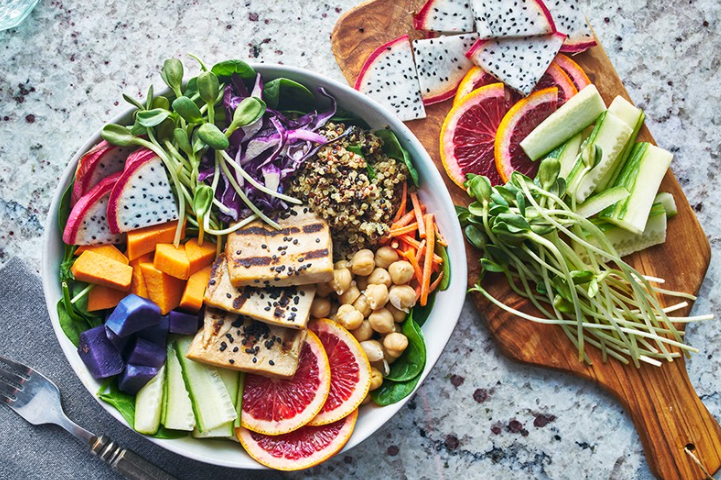
A lot of us know by now the importance that our gut health has on our overall well-being. While there is still a lot of research to be done, a recent study found that eating fermented foods may have a beneficial impact on the makeup of your gut.

Learn more… 

The Subtle Art of Not Giving a F*ck

This title speaks for itself. In Mark Manson’s book, he dives into the concept of learning to live through the unavoidable, negative aspects of life and focusing only on things really worth caring about.

Order now…

Bonus:

FITAID Strawberry Lemonade is back in stock! Get yours now before it’s gone.

----

Best Lightweight Vegan Snacks for Hiking

Hiking is an outdoor activity where packing less is better. You are naturally going to burn A LOT of calories while on the trails so it is best to pack snacks that will keep you energized on your hike. For the vegan hikers out there, there are plenty of snacks that you can pack in your backpack that are delicious and will keep you fueled up. All these snacks are a good combination of protein, healthy fats, and carbohydrates that will give you long-lasting energy for your next hike or outdoor adventure. 


  1. Trail Mix 
  2. Vegan Jerky 
  3. Fresh Fruit and Veggies 
  4. Nuts and Seeds 
  5. Chips, Pretzels, Popcorn 
  6. Dried Fruit 
  7. Protein Bars 
  8. Nut and Seed Butter Pouches 
  9. Tortillas and Hummus 
  10. AND of course, FITAID 


These snacks are ideal to keep you energized while hitting the trails, and even better, most can be made at home! Did we miss any? Tag us on Instagram with your favorite vegan snack! @fitaid 

Debunking Vegan Misconceptions

Veganism, like several other diets, comes with several misconceptions. Whether you see these myths and stereotypes on social media or hear them at work or with friends, doing your own research is the best way to truly understand veganism and how achievable the diet can be for any lifestyle! 


“Being Vegan Is Expensive” 

When you consider the fact that vegans do not eat meat, one of the more expensive items on your grocery list, you’ll realize that veganism is actually very budget-friendly. Some of the staples of a vegan diet are whole grains, rice, legumes, pasta, veggies, and fruits. All of these are some of the cheapest ingredients on Earth. Veganism is actually pretty easy, even on a college student’s budget. Play around with recipes and ingredients – experimenting can lead to some new favorite dishes! 

“You don’t get enough protein on a vegan diet” 

The idea that you can only get protein from animal products is false. In fact, these animals are fed a plant-based diet. So you are basically already consuming plant-based protein just through dead tissue. There are actually several plant-based protein sources that you can get on a vegan diet. These include oats, quinoa, beans, spinach, tofu, lentils, broccoli, nuts, seeds, and many more. Also, you can get plenty of protein from organic plant-based protein powders. As with any other diet, it depends entirely on what you’re consuming.

“Vegans need to drink milk to get calcium” 

If all you watch is “Got Milk?” ads then yes, you would believe milk is the only place you can get a solid source of calcium. However, on a vegan diet, you can rely on several foods that offer high amounts of calcium. For example, dark leafy greens (collard greens and kale), soy-based foods, lentils, beans, and seeds (tahini, chia, and flax), are all great sources of calcium to add to your vegan diet. 

“Being vegan is too hard and too restrictive” 

Making any kind of lifestyle change can be difficult at first but once you get into the groove of things they become second nature. The same can be said for starting a vegan diet. It may be uncomfortable at first but once you have a plan in place, following a vegan diet is actually very easy. Instead of focusing on what you can’t have, focus on what you can have. You will come to realize that a vegan diet actually has many options and substitutes that will open your taste buds to new flavors, spices, and cooking methods. 

MYTHS = DEBUNKED

Do your research, find what works for you, and give a vegan diet a try!

Keep Summer Going with Strawberry Lemonade FITAID


Summer may be over but that does not mean the flavors of summer went anywhere. LIFEAID’s latest innovation, FITAID Strawberry Lemonade, hit the ground running and racked up $250,000 in sales in its first week. “As our first flavor extension, FITAID Strawberry Lemonade checks off all the boxes for a refreshing finish to a hard workout. Stacked with anti-inflammatory goodness and great taste, this is my new favorite in our roster,” said LIFEAID’s president and co-founder Aaron Hinde. LIFEAID’s other co-founder, Orion Melehan, followed suit with Hinde’s statement, saying “With our latest innovation, we wanted to be both strategic and flavor-forward in what we brought to the market.” 


Ice-cold FITAID Strawberry Lemonade was enjoyed all summer at the finish lines of Spartan Races, during the 2021 NOBULL CrossFit Games, and ahead of the 2020 Tokyo Olympics (which took place in 2021), at USA Weightlifting events. With the winter season upon us, do not hesitate to crack open an ice-cold FITAID Strawberry Lemonade to bring back memories of warmth and sunshine. 


“Cans-in-hands is how we build this business and is an integral component to our brand. FITAID Strawberry Lemonade is our first flavor variation of our most popular blend, FITAID, which is specially formulated for athletic recovery,” says LIFEAID’s chief marketing officer, Emily Sommariva. With 2022 Q1 around the corner, LIFEAID is preparing for some very exciting innovations that are for sure to be in the hands of all consumers, new and old. 

Why is LIFEAID Vegan? 

Caring about what you put in your body is what LIFEAID is all about. Living a healthy lifestyle is at the core of our brand. LIFEAID was built on the notion that people wanted more out of their fitness drinks. Whether you are vegan, or thinking of switching to a plant-based diet, it’s important for LIFEAID to be accommodating to all health-conscious consumers. We offer an alternative to high-sugar, high-caffeine, and artificial mass-marketed drinks. Additionally, we are proud to be a vegan beverage company. LIFEAID will continue to encourage people to live healthier lifestyles. 


Health Conscious Consumers Leading The Change 

Over the past 15 years, the number of Americans who identify as vegan has increased by 3,245%. A new study has estimated that at least 15.5 million people in the U.S. currently eat plant-based diets. These numbers are not just prevalent in the states, but across the globe. In the U.K. 42% of vegans are aged 15-34. And in Canada, young people are going vegan to help combat climate change. With those numbers growing, it is important for our brand to be conscious of the consumers of our products. What matters to our customers is important to us. Those switching to vegan diets are reducing their risk of type 2 diabetes, lower cholesterol levels, and lower blood pressure. 

To learn more about the latest statistics and information on veganism, we encourage you to check out this article from the World Animal Foundation.


Veganism and the Environment 

Consumers are becoming more aware of their environmental impact. Together, we are attempting to make the world a better place. As a vegan-certified brand, we are lowering carbon emissions and greenhouse gases, reducing agriculture farming, and making a positive impact on climate change. Now, people are being affected by chronic and infectious diseases, i.e Covid-19, and it is becoming ever more important that we are consuming goods that benefit us. Collectively, we need products that strengthen our immune systems and support health. This is why LIFEAID uses purely clean ingredients and vitamins. 


LIFEAID Culture

Veganism is a lifestyle choice and LIFEAID is all about supporting healthy lifestyles. Just like the ideas behind being vegan, LIFEAID is for your health, for the environment, and for the people. 

“Following a plant-based diet has a plethora of health benefits including reducing post-workout inflammation. At LIFEAID we remain committed to providing our community the highest quality plant-based functional ingredients with low to no sugar and free from artificial flavors and sweeteners.” – Aaron Hinde, Co-Founder and President of LIFEAID Beverage Company

LIFEAID strives to continue being a forward-thinking brand that caters to health-conscious consumers and those who put good in their bodies, to get good out. 

The Best (and easy!) Vegan Pizza Recipes

I mean, who doesn’t enjoy a quality slice of pizza – or two, or three. Easily one of the best comfort foods out there. A slice of pizza can be enjoyed virtually anywhere, whether at a family party, your local pizzeria, or even by yourself with your favorite movie, a slice of pizza (or a whole pie) is never a bad idea. 

Just because following a vegan diet means you must avoid dairy, does not mean you have to avoid pizza all together. These recipes are so full of flavor, you won’t even notice it’s not there! Here are some of the best and easy vegan pizza recipes we’ve tried (warning: you’ll be craving a fresh slice after this!). 

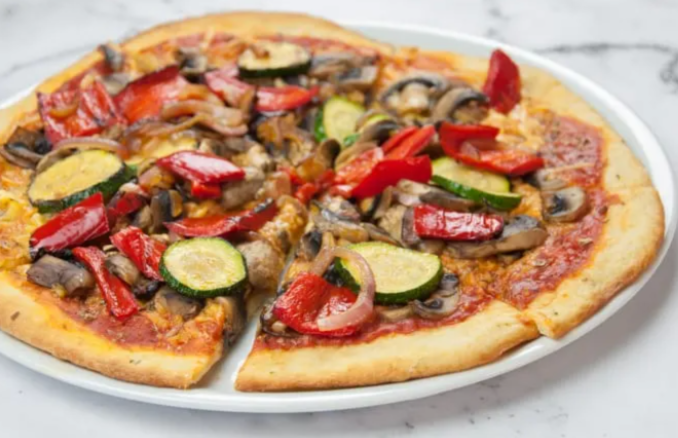
Grilled Veggie Pizza with Yeast-Free Crust 


Ingredients 

Yeast-Free Pizza Crust 

  • 2 ½ cups all-purpose flour
  • 1 tablespoon baking powder 
  • ½ teaspoon salt 
  • 1 teaspoon olive oil 
  • ⅔ cup lukewarm water

Pizza Sauce 

  • ½ cup tomato purée 
  • ¼ teaspoon salt 
  • ½ teaspoon dried oregano 
  • ½ teaspoon dried basil

Toppings

  • 1 teaspoon olive oil (+more for brushing the crust) 
  • ½ zucchini 
  • 1 red bell pepper (cut into chunks) 
  • 5 cups mushrooms 
  • 1 red onion 
  • ¾ cup vegan cheese shreds
  • 1 pinch salt 


Instructions 

  1. For the pizza dough: Combine the all-purpose flour, baking powder and salt in a large bowl. Add the olive oil and water (little by little) and knead until a smooth dough forms. You might not need all the water or add a bit more. The dough should be non-sticky. If it gets too sticky, add a bit more flour. You can either knead it by hand or let it knead in a kitchen machine.
  2. For the pizza sauce: Combine the tomato purée, salt, dried oregano and dried basil. 
  3. In a large pan, heat the olive oil and add the zucchini, red bell pepper, mushrooms and red onion. Season with a pinch of salt and let it cook on medium to high heat until the veggies are soft. 
  4. Preheat the oven to 480°F/250°C.
  5. Divide the pizza dough into two equal parts and roll them each out on a lightly floured parchment paper. Spread the tomato sauce on top. Cover with vegan cheese shreds and veggies. Brush the crust with olive oil (or herbed olive oil if you have one available!). Bake the pizzas in the oven for about 15 minutes until crispy. Enjoy! 


Vegan Pepperoni Pizza 

Ingredients

For the Crust 

  • 1 ½ cup gluten-free flour 
  • ½ cup water 
  • 1 tablespoon olive oil 
  • 2 teaspoon aluminum free baking powder 
  • Pinch of salt 

For the Topping

  • 2 tablespoons tomato paste 
  • 2 zucchini 
  • Hot sauce (all to your liking) 
  • 2 tablespoons tamari 
  • 2 tablespoons balsamic vinegar
  • Vegan cheese (as much as you desire) 


Instructions 

Prepare the Zucchini “Pepperoni” 

  1. Wash and thinly slice the zucchini.
  2. In a baking dish, mix hot sauce with tamari and balsamic vinegar. Add the zucchini and mix, so that they are covered well.
  3. Cover and marinate overnight in the fridge.
  4. Pro-tip: Put the spiced zucchini in the oven and bake at medium heat (320°F/160°C) for 10-15 minutes before storing in the fridge.


For the Crust

  1. Give all ingredients for the dough to a bowl and knead well. You should have a slightly moist but sticky dough. Let it sit for a couple of minutes.
  2. Form the pizza crust by spreading the dough.


To Make the Pizza 

  1. Preheat oven to 390°F (200°C)
  2. Spread the tomato paste on top of the crust. Add the marinated spicy zucchini slices. Top off with vegan cheese. You can of course use as much as you like.
  3. Bake in the oven for 12-15 minutes.


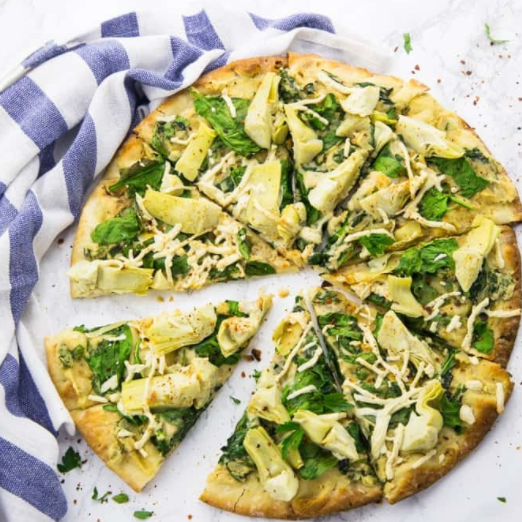
Spinach Artichoke Pizza 

Ingredients 

  • 1 can white beans 
  • ¼ cup water 
  • 2 tablespoons nutritional yeast
  • ½ cups cashews 
  • 1 tablespoon fresh lemon juice 
  • 1 onion, chopped 
  • 5 cups fresh spinach
  • 2 cloves garlic, minced 
  • 1 can artichoke hearts, drained 
  • Salt 
  • Black pepper 
  • Red pepper flakes 
  • 2 premade pizza dough or dough from scratch 
  • ½ cup vegan mozzarella cheese


Instructions 

  1. Preheat the oven to 350 °F.
  2. Rinse and drain the canned white beans and put them in a blender together with the cashews, the lemon juice, the water, and the nutritional yeast. If you want to make it a bit easier for your blender, you can soak them in water for 4-6 hours before using them. Put aside.
  3. Heat some oil in a large pan and sauté the onion for about 3 minutes until they become translucent. After 2 minutes, add the garlic. Then add 2 cups of the spinach and cook for 3 more minutes. Stir in the blended white bean and cashew mixture. Season with salt, pepper, and red pepper flakes.
  4. Evenly spread on the pizza dough. Cut the artichoke hearts in quarters and put them on the pizza together with the remaining spinach. Sprinkle with the vegan cheese.
  5. Bake the pizza for 8 minutes or check out the instructions on the package (each pre-made pizza dough is different). Enjoy!


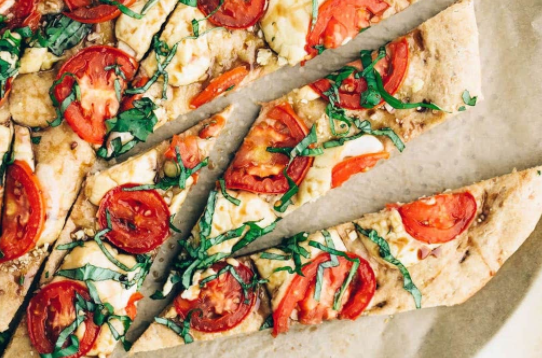
Vegan Caprese Pizza 

Ingredients 

  • 1 pound multigrain pizza dough (allow it to sit at room temperature for 30 min before rolling 
  • ⅔ cup filtered water
  • ½ cup raw cashews 
  • 1 tablespoon nutritional yeast
  • 1 tablespoon arrowroot powder 
  • 1 tablespoon apple cider vinegar
  • ½ teaspoon sea salt 
  • 2 tablespoons olive oil
  • 2 to 3 cloves garlic, minced 
  • 2 to 3 ripe tomatoes, thinly sliced 
  • Alessi Balsamic Reduction
  • Handful fresh basil leaves, thinly sliced 
  • Crushed red pepper flakes 


Instructions

  1. Preheat the oven to 400F. Line a round, vented pizza pan with parchment paper. 
  2.  Lightly dust a clean work surface with flour, and roll the pizza dough out into a 15-inch circle. Transfer to the lined pizza pan and bake for 7 minutes, or until the bottom is just beginning to set.
  3. While the pizza bakes, prepare the cashew mozzarella by adding the filtered water, cashews, nutritional yeast, arrowroot powder, apple cider vinegar, and sea salt to a high-speed blender. Blend on high for 2 minutes, or until completely smooth. Pour the mixture into a saucepan. Turn the heat on medium and whisk constantly for 3 to 5 minutes, or until it just begins to thicken. Do not overheat. Set aside to cool slightly.
  4. Brush the top of the par-baked pizza dough with the olive oil and sprinkle with the garlic. Use a tablespoon to drop spoonfuls of the cashew mozzarella across the surface of the pizza. Top with the sliced tomatoes.
  5. Return the pizza to the oven and bake for another 8 to 14 minutes, or until desired doneness is reached.
  6. Remove from the oven and let cool slightly. Generously drizzle with the Alessi Balsamic Reduction and sprinkle with fresh basil. If desired, season with sea salt and crushed red pepper flakes.
  7. Serve immediately.


If you try any of our delicious (and easy) vegan pizza recipes, we would love to see your creation on Instagram – tag us at @FITAID !